
I live in Maryland but have a cell phone number from Pittsburgh.
Every single day, I get calls from a 412 area code because my number is a 412 number.
I know it’s a scammer.
Scammers do this because they are trying to simulate a local caller on the off chance I answer it because I think it’s a neighbor or local service provider (police, sheriff, dentist, doctor, etc.).
If they get you on the phone, they use urgency and fear to try to get me to fall for their trap. Sometimes it’s to steal information, sometimes it’s only to confirm what information they have, and sometimes they just need to check that the phone number is live.
If you get these calls and want to know how to deal with them, here’s what you need to do to protect yourself:
Table of Contents
1. Silence Unknown Callers
The most important thing you can do is ignore these calls and send directly to voicemail. Use voicemail as your screener. If they are legitimate call, they’ll leave a message and you can call them back.
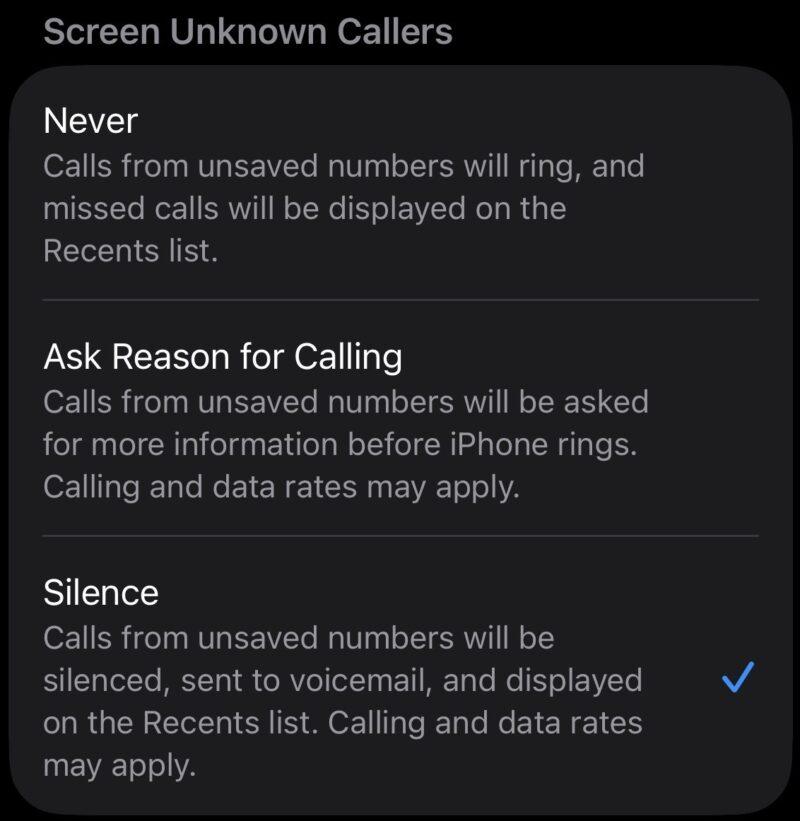
You can also opt for Filter Unknown Senders if you’d like the iPhone to do the screening for you.
This one step alone will reduce your headaches tremendously, which is why this feature exists!
2. Turn On Carrier-Level Spam Blocking
If you’re racked by FOMO and don’t want to silence all unknown callers, many carriers now offer call filtering through an app that will flags known scam numbers and automatically silence high-risk calls.
Install the one for your carrier so you get some protection:
3. Delete Your Information from Data Brokers
Data breaches have put your name on lists being circulated on the dark web. You can’t do anything about those lists but sometimes your information gets passed onto a large network of publicly facing data brokers that sell this information.
Here’s a guide to how to delete your information from data brokers, including links to the opt-out pages.
It is a pain and a huge time sink to do this, but it’s worth it.
4. Call Your Bank Directly
Let’s say you skipped #1 and you answered the phone to talk to them. (oops 😳)
They tell you they’re from your bank and they are lucky enough to get your bank right. Or they know because they have your data from the dark web and know that you have a Chase card.
Just hang up and call the bank directly at the customer service number on the back of your card.
It does not matter what the caller ID says – it’s lying. It will match whatever Chase customer support’s number is even when it’s not. That number can be faked, a.k.a. spoofed, very easily if you’re calling with VoIP (voice over internet protocol) technology, which they almost certainly are. They’re calling from a call center using an internet based system.
Your bank is used to this! I once got a legitimate call from Vanguard and when I asked them “how do I know it’s Vanguard?” they gave me a case number, told me to look up their customer service number on the website, and instructions on how to navigate the phone system to get back to the fraud department. They totally understood and even said “talk to you in a few minutes!”
5. Protect Your Identity
With the three steps above, you’ve dealt with the immediate threat of the scam call.
Now, it’s important you implement the steps in our do-it-yourself identity theft guide.
All of the steps are free and just take a few minutes each to implement.
If you only have a little bit of time, I suggest you do the following first:
- Turn on two-factor authentication on every financial account
- Freeze your credit at Equifax, Experian, and TransUnion
- Implement a classified email address for financial accounts
Do those today and get to the rest in the near future.
6. Tell Your Friends & Family
The next time you get together with friends and family, share your story. It’s a good reminder for you and them about the dangers of unsolicited calls and how clever scammers have become.
You may be savvy to these things but they may not be. They may not know how trivial it is for a scammer to fake or spoof a phone number. They may not know their data is on the dark web and how much is publicly known about them.
By talking about it publicly, it brings more awareness and, hopefully, reduces how effective scammers are. At the very least, it protects your friends and family.